An oasis town in the desert of Gansu, China, and the old western gateway of the Silk Road.
Step into caves painted across a thousand years at Mogao, then ride a camel over golden dunes to the Crescent Lake at sunset.
Mogao tickets, decodedA, B and winter tickets, and what a tour adds
Group-size pricesWhy a from-price is lower than what a couple pays
Free cancellationUp to 24 hours before on all but one tour here
Private guidesHotel pickup and your own guide on most tours
Tours
Choose your Dunhuang tour
In the centre, a private day that covers Mogao, the Mingsha dunes and Crescent Lake. Either side, a half day
at Mogao only and the long Gobi day to Yumen Pass, the Han wall and Yadan. Every card opens a full tour page.
Just the caves: hotel pickup, the films at the Digital Exhibition Center and the guided cave visit. You give passport details at booking, because every Mogao ticket is issued in your name.
What's included
Mogao admission, marked as included in the itinerary
Hotel pickup and drop-off by air-conditioned minivan
Mogao in the morning, the Mingsha dunes and Crescent Lake later, then the Shazhou night market. The from-price is the cheapest option; entry tickets come with the all-inclusive one.
What's included
Pick guide only, guide and car, or all-inclusive with entry tickets
Hotel pickup and drop-off on the car options
About 3 hours at Mogao, then the dunes, the lake and the night market
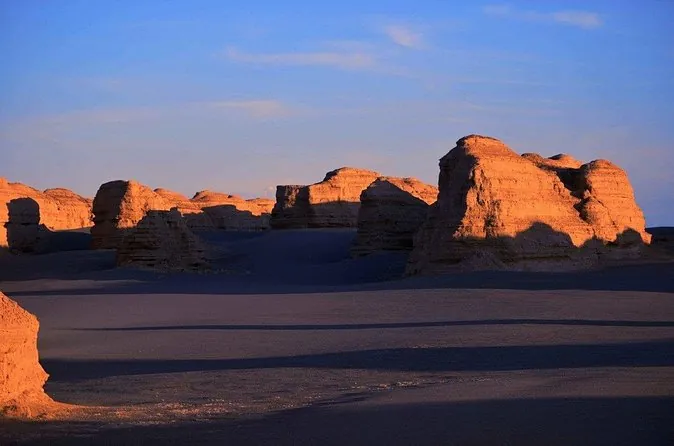
The desert day: the Jade Gate fort, Han dynasty wall ruins and the wind-carved yardangs of the Yadan geopark. Entry fees and both park buses are included; most of the day is the drive.
What's included
Private air-conditioned car and English-speaking guide
Entrance fees for Yumen Pass and the Yadan geopark
Three questions sort it out. Do you want Mogao, the desert, or both? Are the entry tickets in the price or
paid on the day? And how many of you are travelling, since nearly every price here drops as the group grows?
Prices are per person and fall as your group grows; a solo traveller pays the most. Every Mogao
ticket is issued in your name, so have passport details ready when you book. All tours cancel free up to 24 hours before,
except the all-inclusive Mogao and singing dunes day.
Before you book
One ticket system, whoever you book with.
Every visit to the Mogao Caves runs through the same official reservation system of the Dunhuang Academy. A ticket
is booked for a time slot and in your name, checked against your passport, and starts at the Digital Exhibition Center
on the edge of town. From there a shuttle drives about 15 km to the cliff, and a site guide takes your group into the
caves. No tour gets you in earlier, and no tour picks the caves: they rotate for conservation.
What a tour does add is the booking, the car and a private guide for the rest of the day, plus the dunes, the
lake or the Gobi sites that are hard to reach alone. What it does not always add is the ticket class you expect. The
regular A ticket gives you two films and 8 caves; the B "emergency" ticket, sold once A is gone, gives you 4 caves and no
films. In July, August and Golden Week, ask your operator which one you have.
8
Caves on a regular Mogao ticket from April to November, out of 735 cut
into the cliff. The emergency ticket shows you 4; a winter ticket shows you 10.
Mogao CavesMingsha ShanCrescent LakeYumen PassYadan
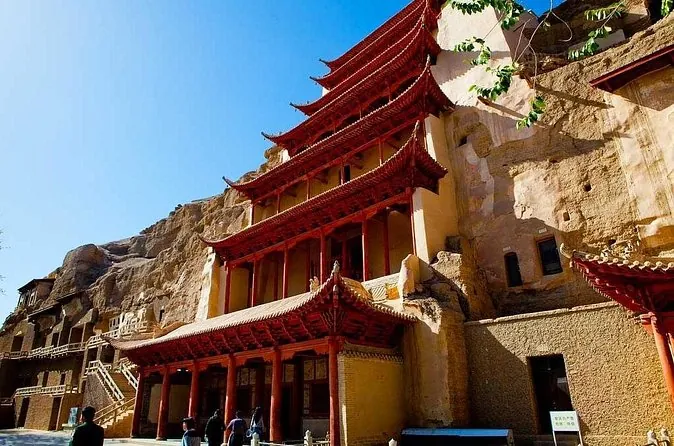
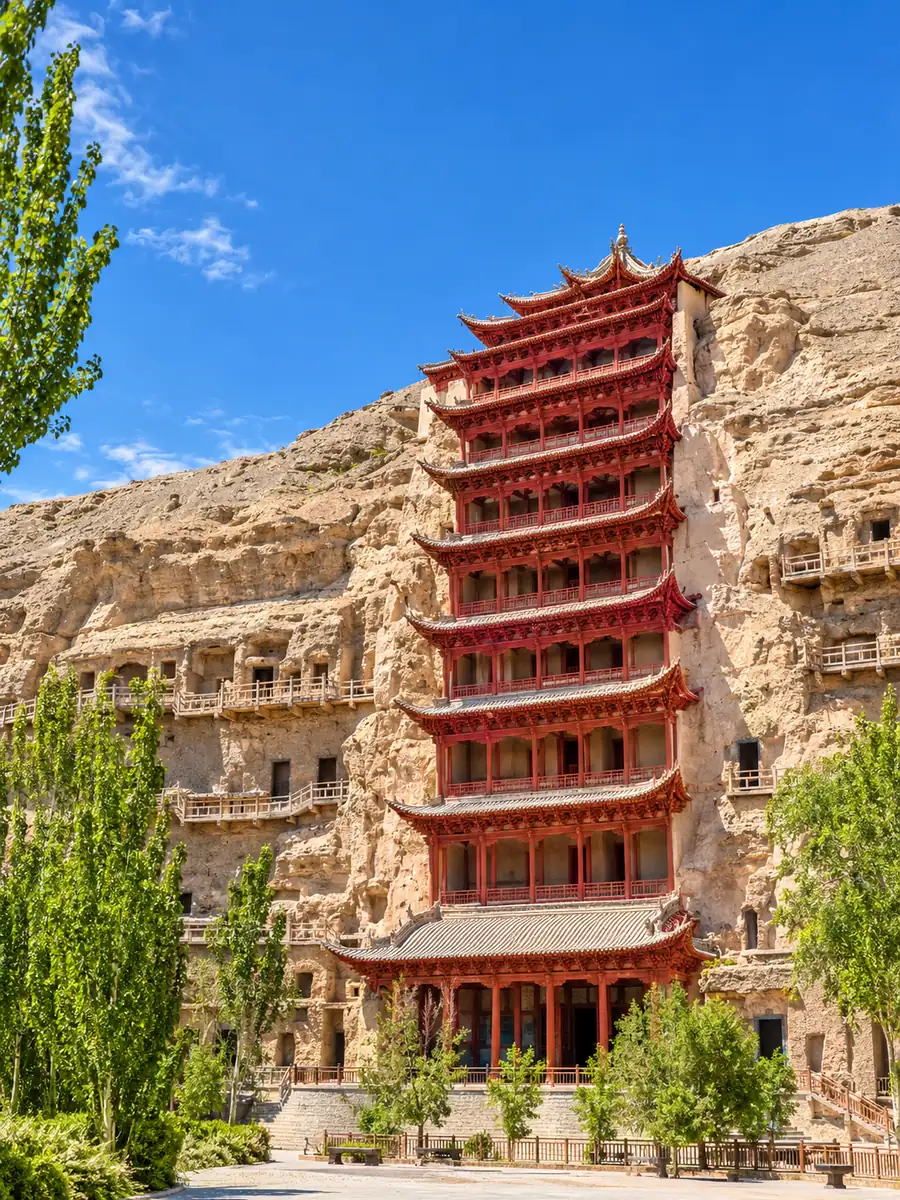
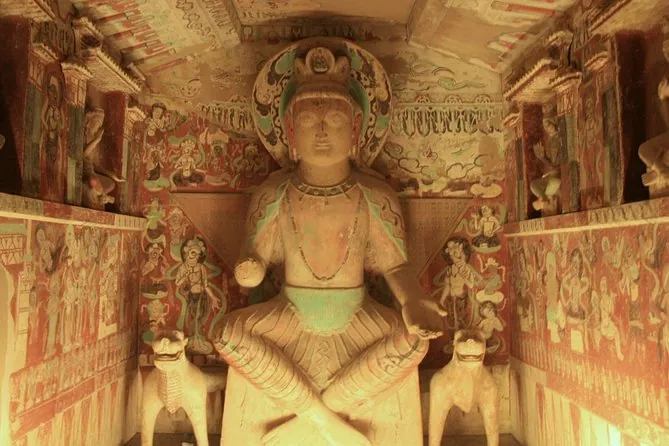
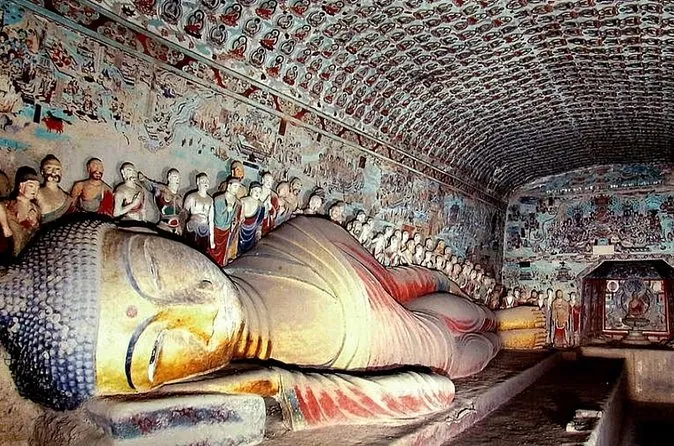
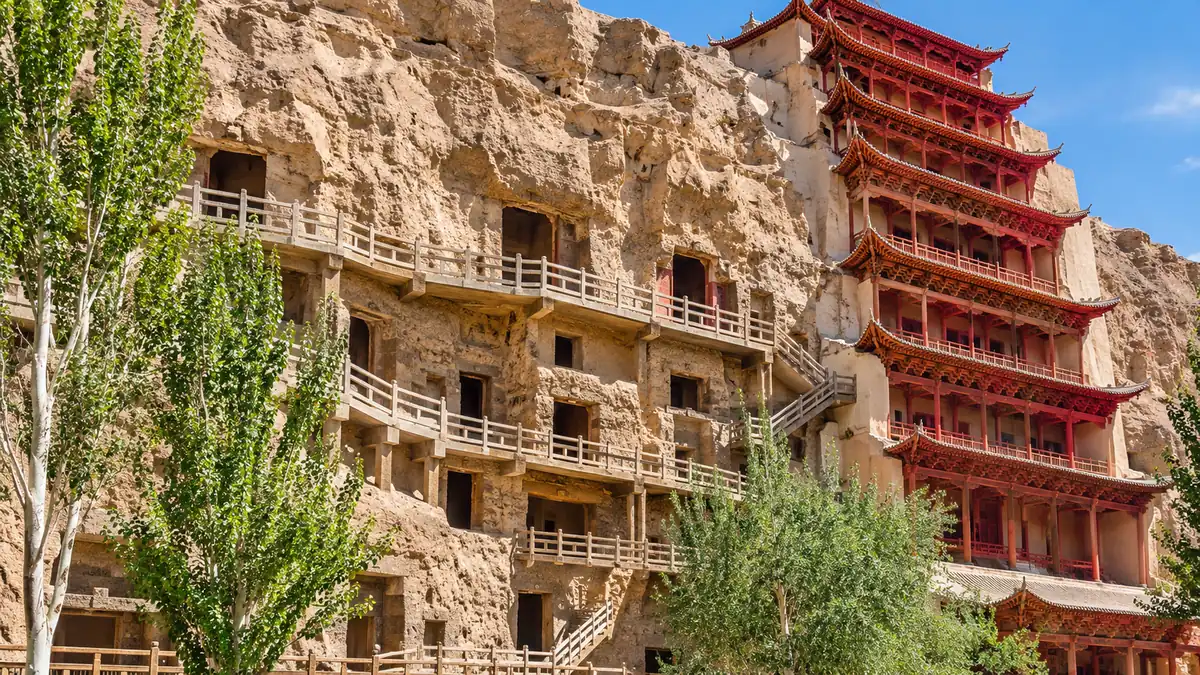
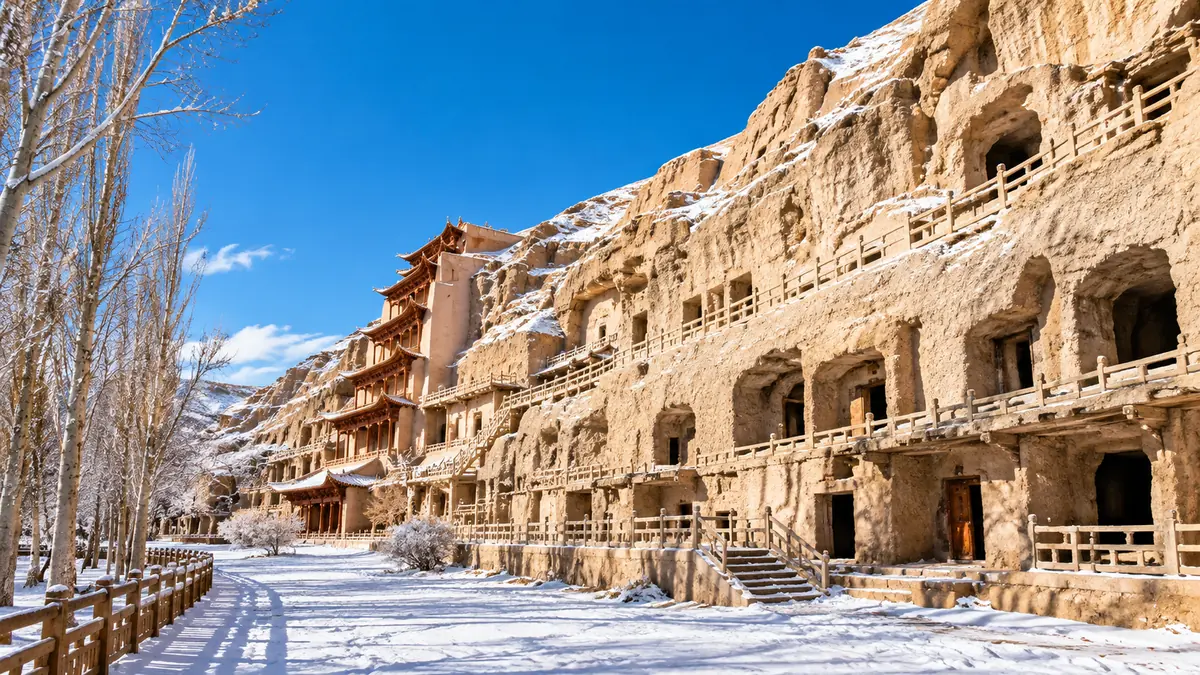
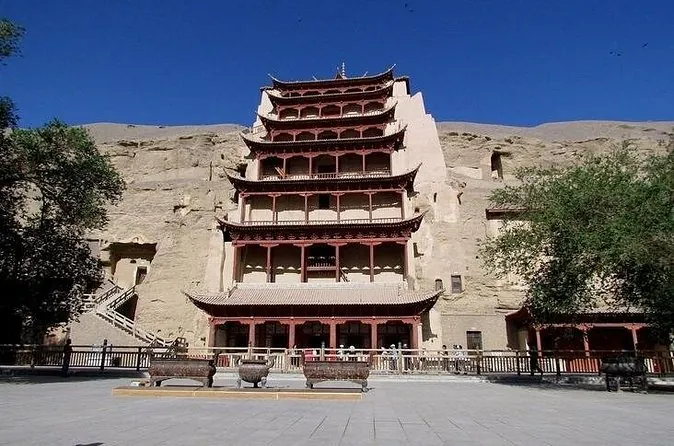
The nine-storey facade at Mogao covers a giant seated Buddha carved inside the cliff.
01
Do I need a tour?
Not for Mogao itself: you can book the ticket yourself. A tour pays off for the desert sites.
02
When to book?
Weeks ahead for July, August and early October. Both ticket classes sell out.
03
What to bring?
The passport you booked with. It is checked at the center and again at the caves.
04
Photos?
Not inside the caves. Outside, along the cliff and on the dunes, as many as you like.
Your day
How a Dunhuang day runs
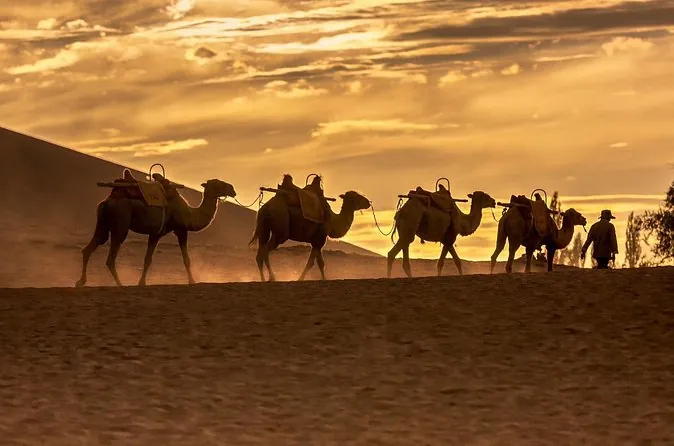
The classic private day puts Mogao in the morning and the dunes in the late afternoon, when the sand cools and the light turns gold.
01
Pickup at your hotel
Your guide and driver meet you in town. Have your passport on you: the Mogao ticket is in your name.
Morning
02
Films, then the caves
Two short films at the Digital Exhibition Center, the shuttle to the cliff, then a site guide leads you through the caves.
About 3 to 4 hours
03
Lunch and a break
Back in town for noodles and a rest through the hottest hours. Lunch is extra on most tours.
Midday
04
Dunes and the lake
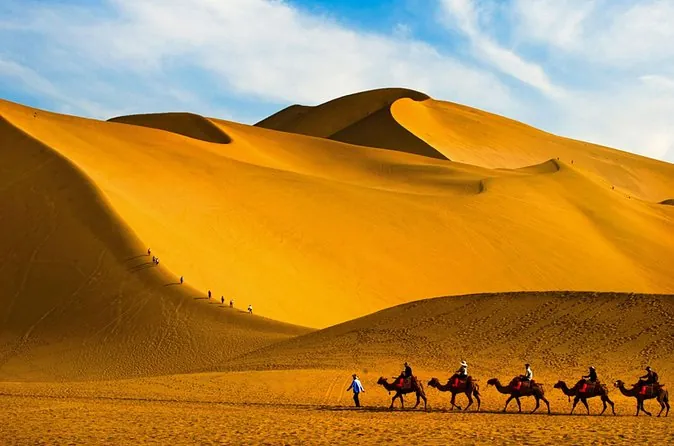
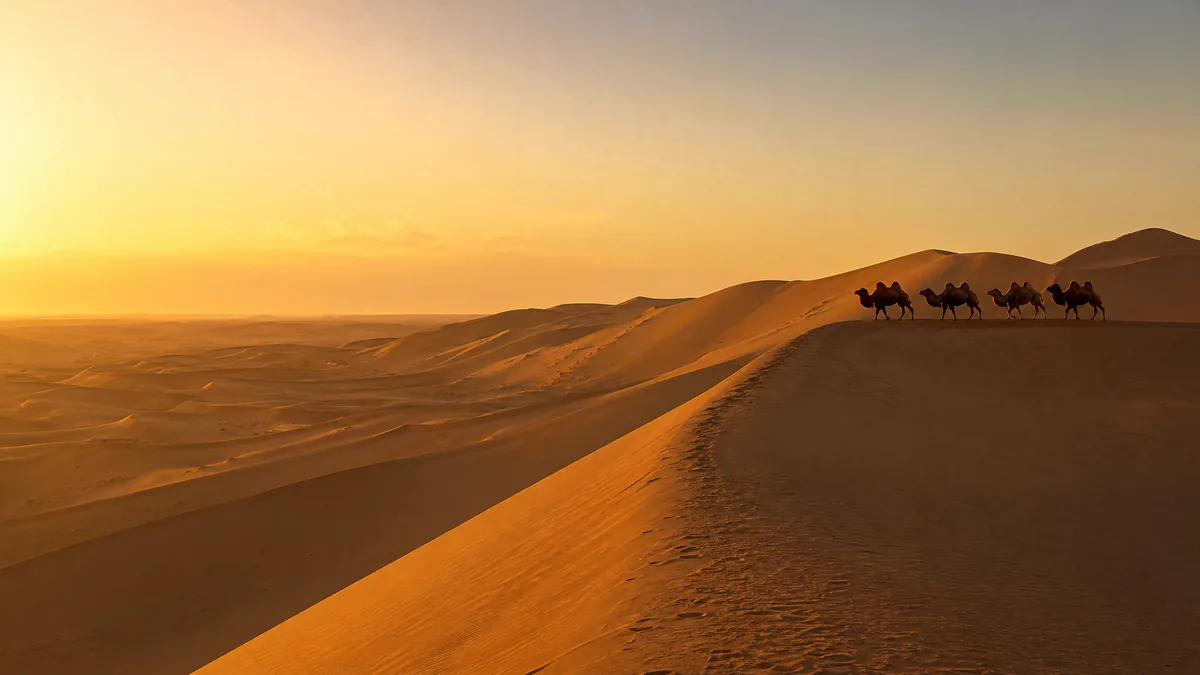
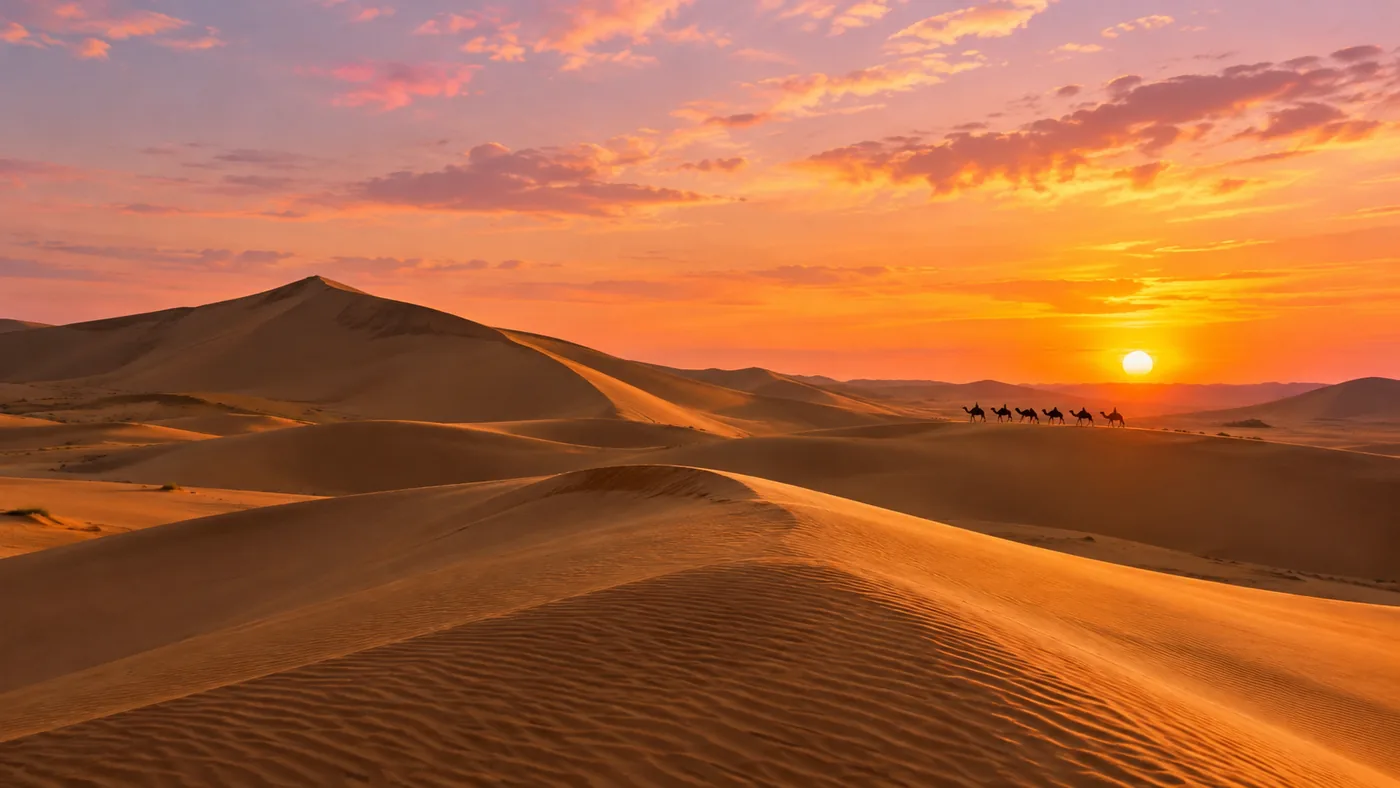
Climb Mingsha Shan or ride a camel, walk round the Crescent Lake, and stay for the sunset.
Mingsha Shan and Crescent Lake: CNY 110 from April to October, CNY 55 in winter, valid for re-entry over 3 days.
Camel ride: about CNY 100 per person; sand boots to rent cost a little extra.
Yumen Pass: CNY 40, plus the sightseeing bus between the sites.
Yadan National Geopark: about CNY 120 with the compulsory park bus.
By air: Dunhuang Mogao International Airport, a short drive from town, with flights from several Chinese cities.
By train: Dunhuang station has direct trains; fast trains on the Lanzhou to Xinjiang line stop at Liuyuan, about 2 hours away by road.
In town: Mingsha Shan is about 5 km south of the centre; Mogao is about 25 km southeast.
Most private tours include hotel pickup in Dunhuang; airport and station transfers cost extra on several.
Mogao: 4 to 5 hours door to door, about 2 of them inside the caves.
Mingsha Shan and Crescent Lake: 2 to 3 hours, best at sunset or sunrise.
Yumen Pass, Han wall and Yadan: a full day of 7 to 10 hours, most of it on the road.
Two days cover Mogao and the dunes; three add the Gobi. Plan it in the itinerary guide.
Mogao Caves25 kmSoutheast of town; every visit starts at the Digital Exhibition Center.
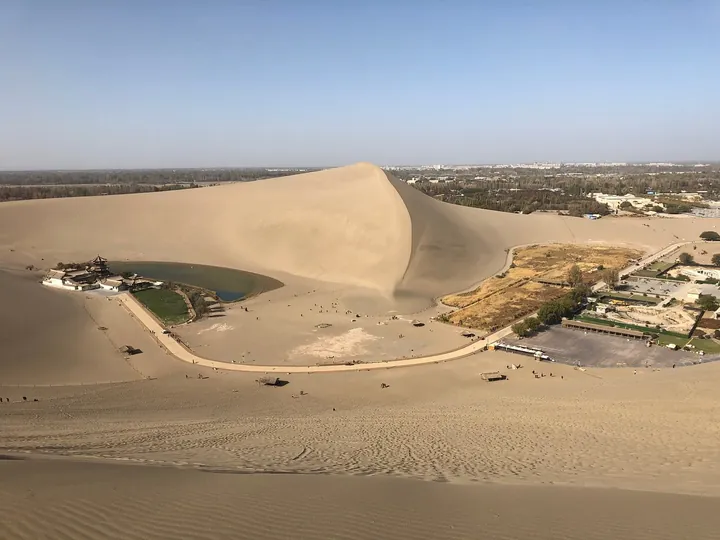
Mingsha Shan5 kmThe singing dunes and Crescent Lake, at the southern edge of Dunhuang.
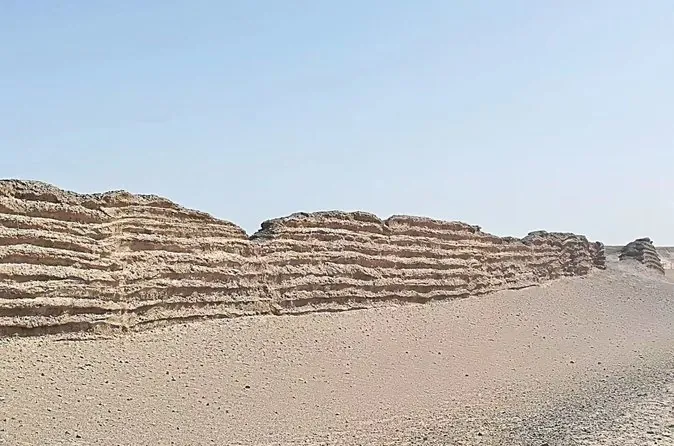
Yumen PassAbout 90 kmThe Han dynasty Jade Gate fort and the ruins of the Han wall.
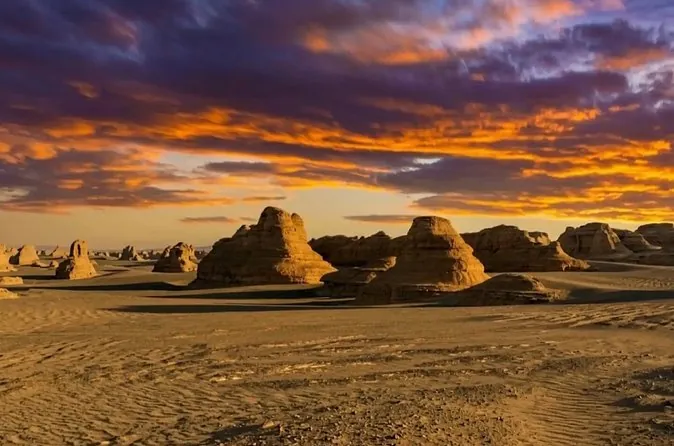
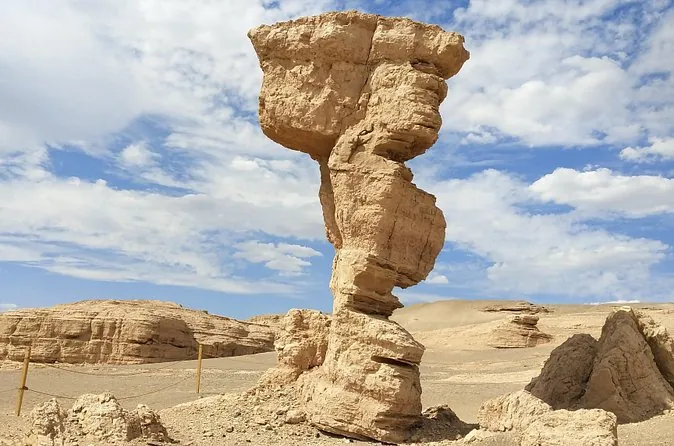
Yadan geopark160 to 180 kmWind-carved clay ridges in the Gobi, visited by park bus.
Ticket classA or B8 caves or 4: ask which one your tour books.
Refund24 hoursFree cancellation on every tour here but one.
Where it happens
Where the caves and dunes are
Hotel pickup in Dunhuang
Mogao visits start at the Mogao Caves Digital Exhibition Center, on the edge of Dunhuang
Dunhuang is small, and the private tours here pick you up at your hotel in town. The Mogao Caves sit in a cliff above
a dry riverbed southeast of the city; Mingsha Shan rises right at its southern edge. The Gobi sites are far out to the
northwest, which is why a car and driver make sense for them.
4.8★★★★★ 11 reviews · Private Mogao and Crescent Lake day Viator rating
★★★★★
The Mogao Caves are well worth seeing - went round with a guide who worked on the site. [...] The afternoon was great - completely different. Had a camel ride up the dunes and a walk around the lake.
★★★★★
They were flexible about the pick up location and we could change in the last minute. Cathy told us a lot of stories about the Dunhuang area. Yadan is just speechless stunning.
★★★★★
The Mogao Grottoes are amazing. The dunes for a hike is also great. So much history. [...] The guide for the caves was very knowledgeable. I chose the 8 caves option.
★★★★★
He was extremely professional in arranging to meet me with a private car at my hotel [...] and he customized my tour to see the Jade Gate, the Dunhuang Solar Power Plant [...] and the Mogao Caves.
★★★★★
Had a great tour in Dunhuang in November 2025. Visited Mogao Caves and Singing Dunes. Guide was very kind and knowledgeable. Fully recommended.
★★★★★
We had a great time with Meili. It was awesome to have a french guide as requested. My parents and the kids enjoyed their time in Dunhuang.
Keep going east
Make it a Silk Road journey
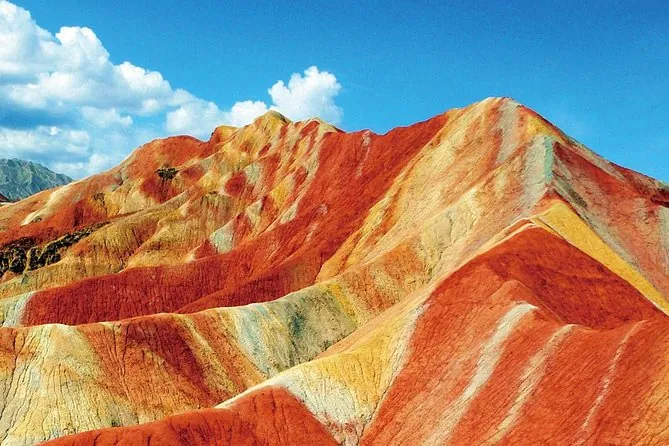
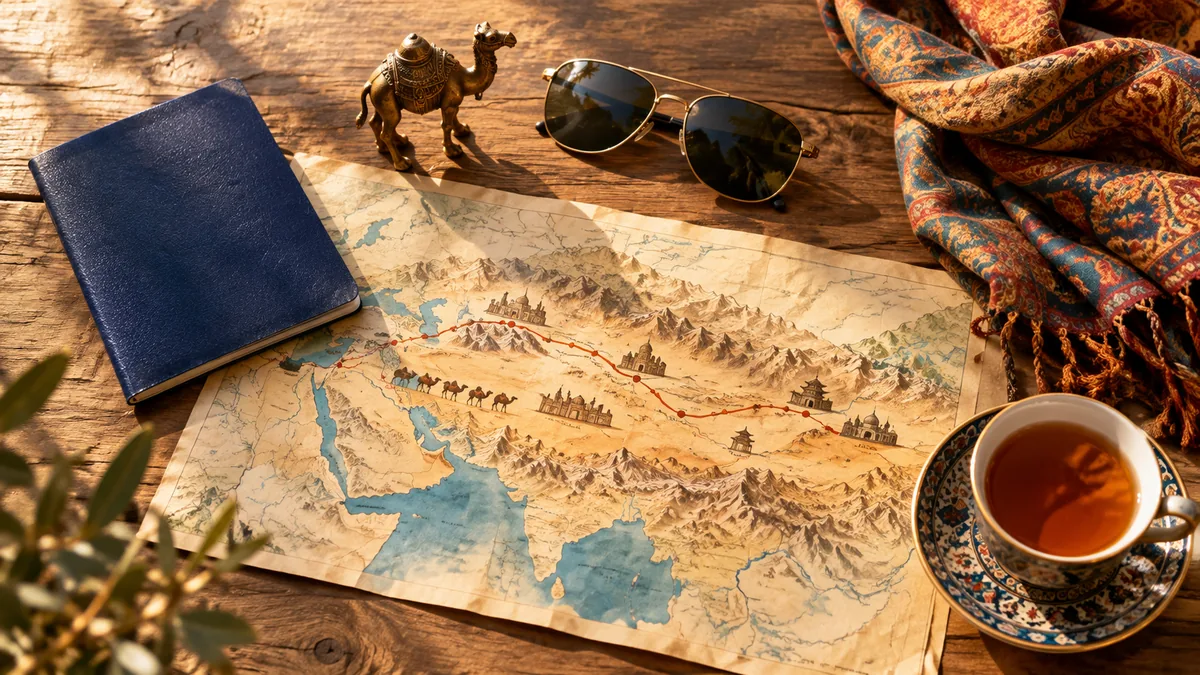
Dunhuang is where the Hexi Corridor ends. With more than a few days, follow it east to Jiayuguan and Zhangye.
Dunhuang is the far end of the Hexi Corridor. This private trip starts there and works east: Mogao, the dunes and the Yulin Caves, then Jiayuguan fort and the striped Danxia hills of Zhangye, with seven nights in hotels and every meal included.
Dunhuang sat where the Silk Road left China for the deserts of Central Asia. Monks, merchants and soldiers
all passed through, and each left something behind: painted caves, forts, a wall of reeds and earth.
The Mogao Caves
The first cave was cut into the cliff above the Daquan river in 366, by a monk named Lezun, and the digging went on for
about a thousand years. Today 735 caves survive, 492 of them with murals or painted statues: more than 45,000 square
metres of painting in all. The site has been on the
UNESCO World Heritage list since
1987. In 1900 a Taoist caretaker found a sealed side chamber, the Library Cave, packed with manuscripts that ended up
scattered across museums in London, Paris and beyond.
What you see is a small, changing slice. A regular visit opens 8 caves in the main season and 10 in winter, chosen by the
Dunhuang Academy on the day. That is deliberate: breath, humidity and light damage the murals, so the caves take turns.
Guests who expect to choose are often disappointed; guests who expect a rotating selection usually come out amazed.
Cave doorways stacked along the Mogao cliff, linked by walkways.
The singing dunes and the Crescent Lake
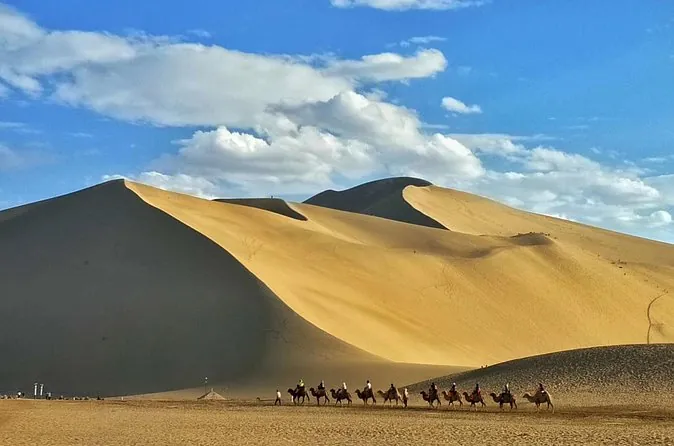
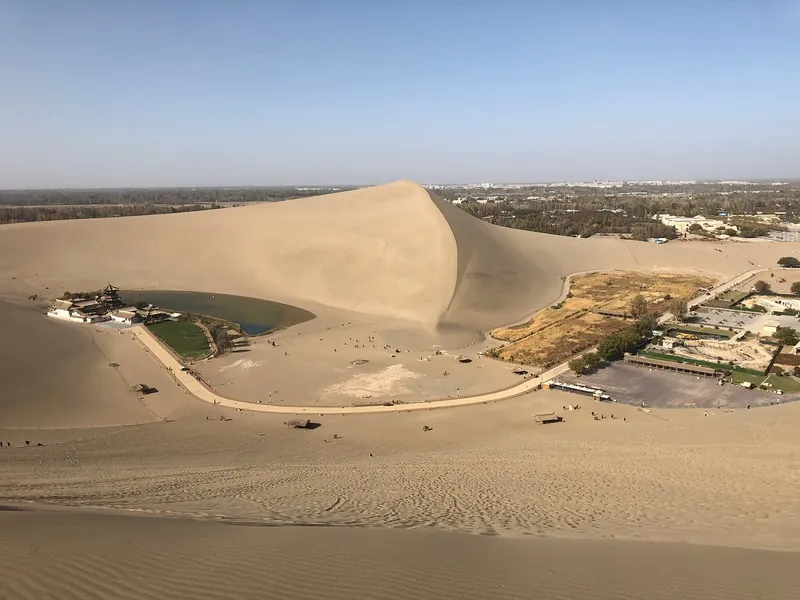
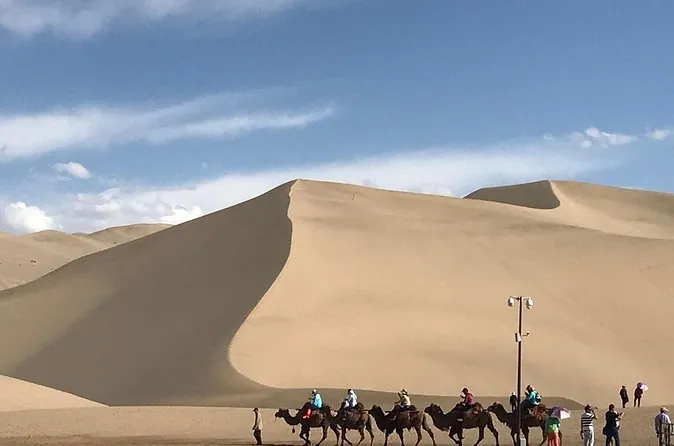
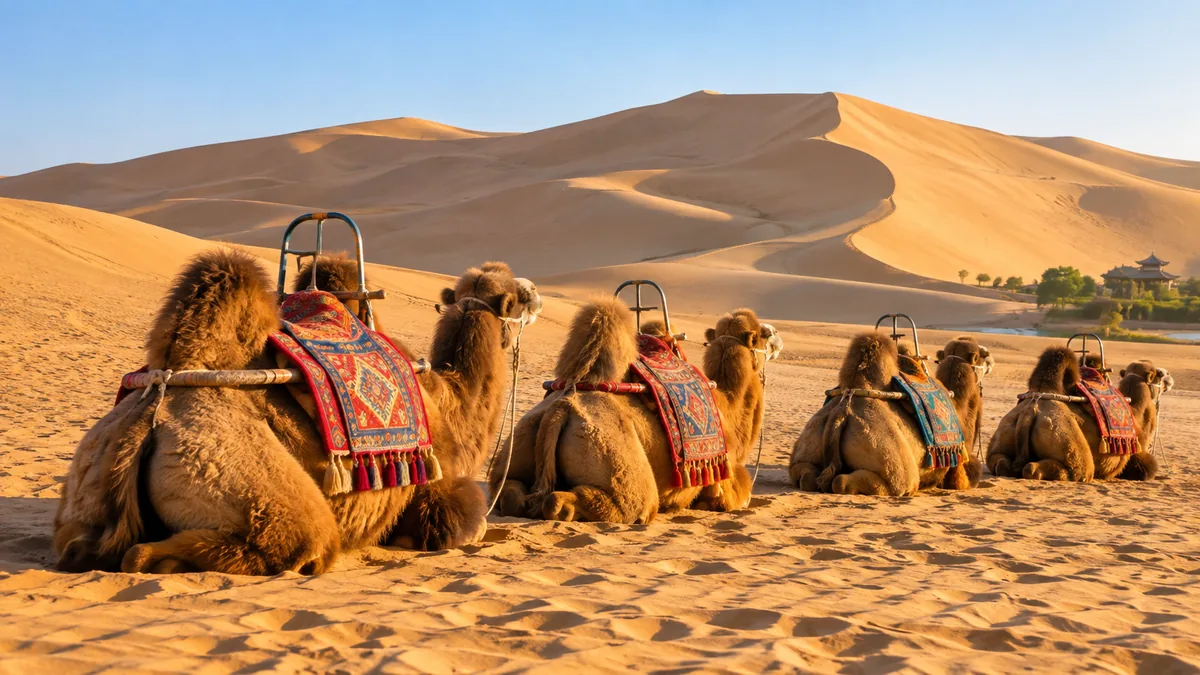
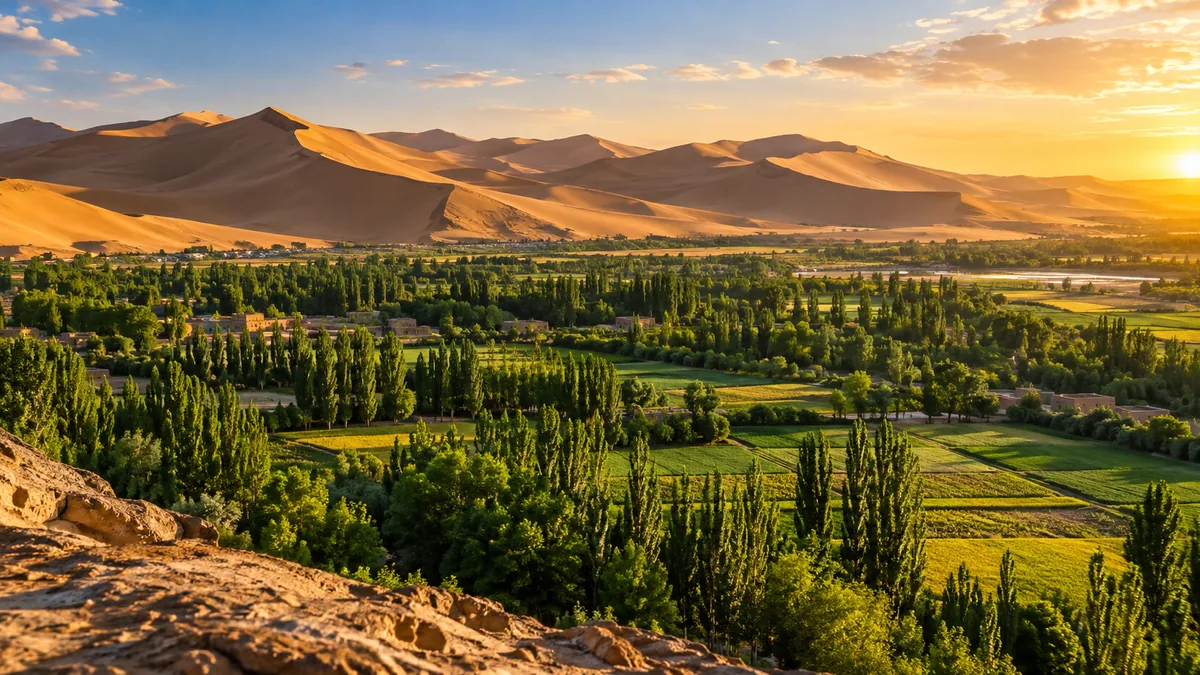
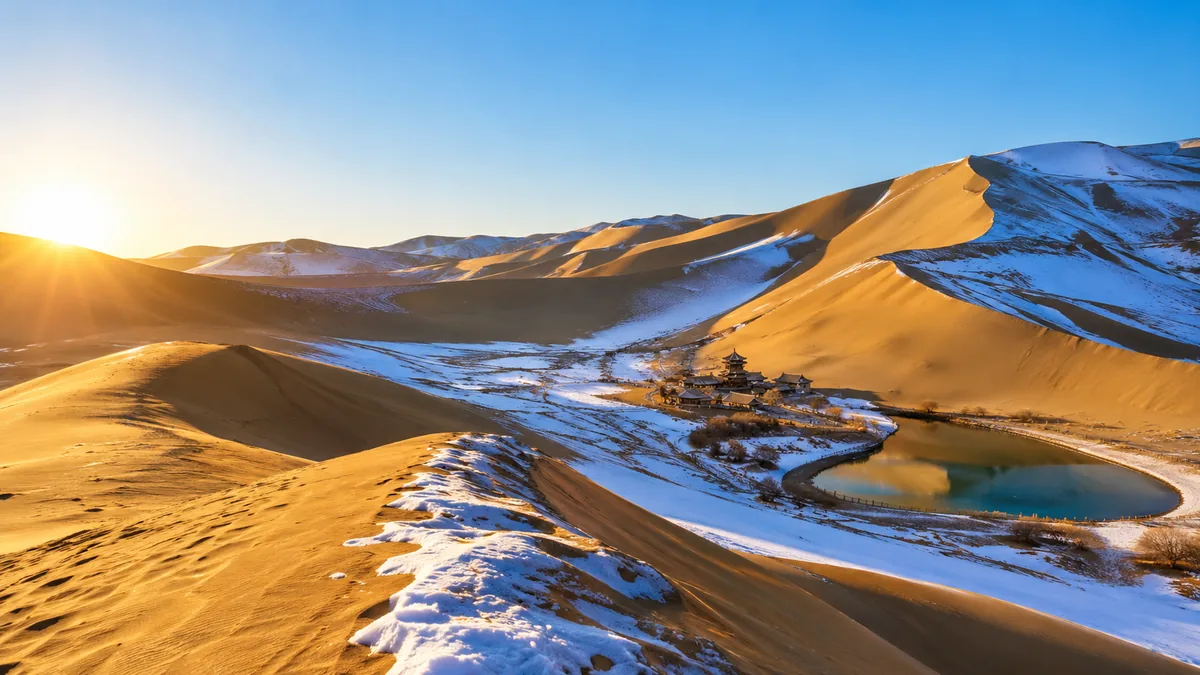
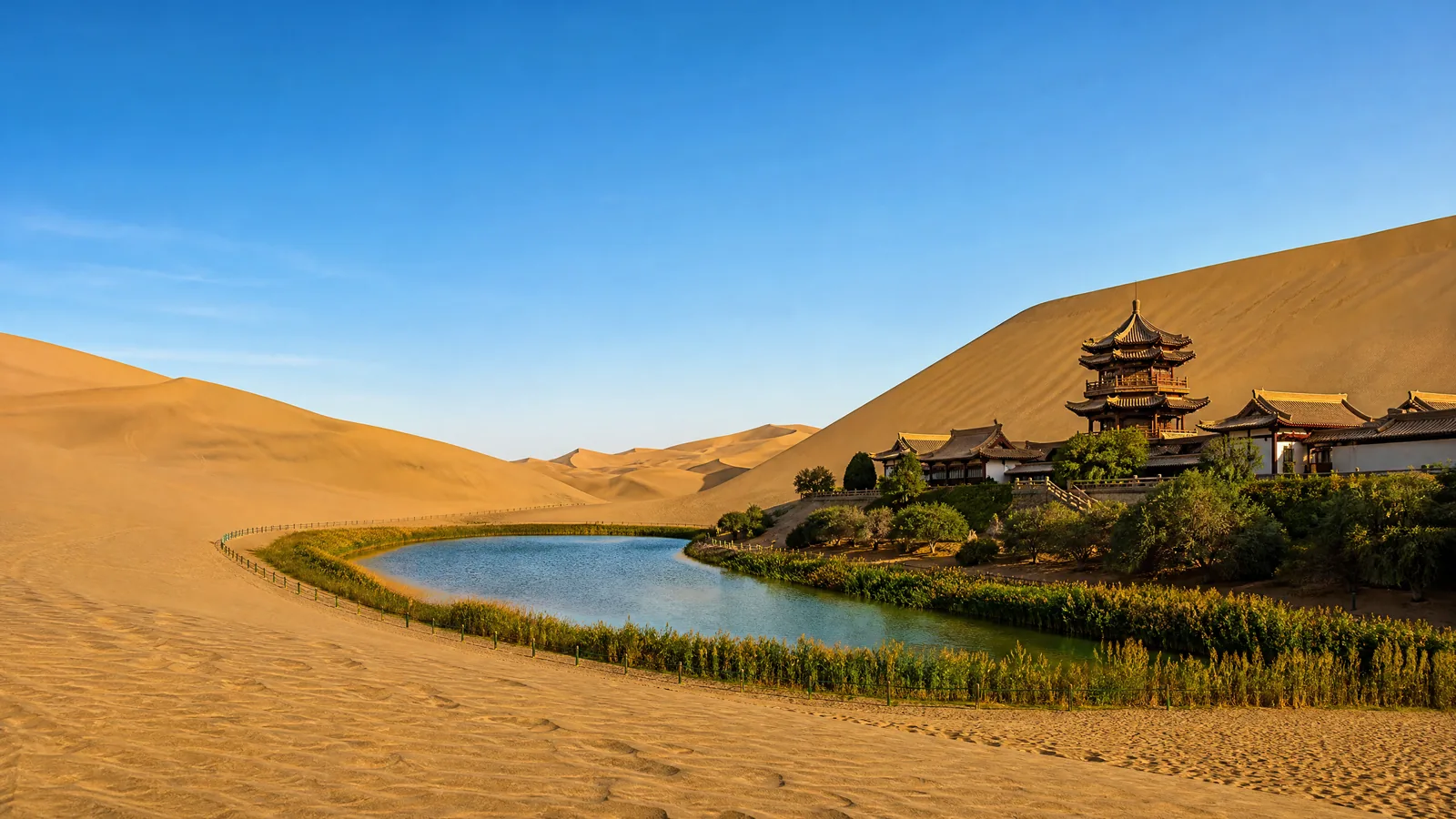
Mingsha Shan, the Singing Sand Mountain, starts at the southern edge of town: tall dunes that hum
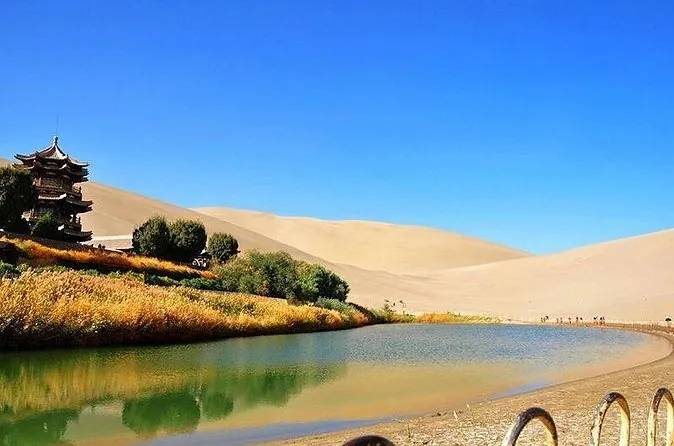
when the sand slides. Tucked between them is the Crescent Lake, a spring-fed pool in the shape of its name, with a
pavilion complex on its bank. People come for the climb, the camel ride along the ridge and, above all, the sunset.
The park ticket lasts three days, which makes a sunrise visit easy to add.
The honest small print: a from-price on a private Dunhuang tour is the cheapest option for the largest
group. Entry tickets are often an upgrade, lunch and the camel ride are usually extra, and two people pay more each than six.
Each of our tour pages says what the price covers.
Out into the Gobi
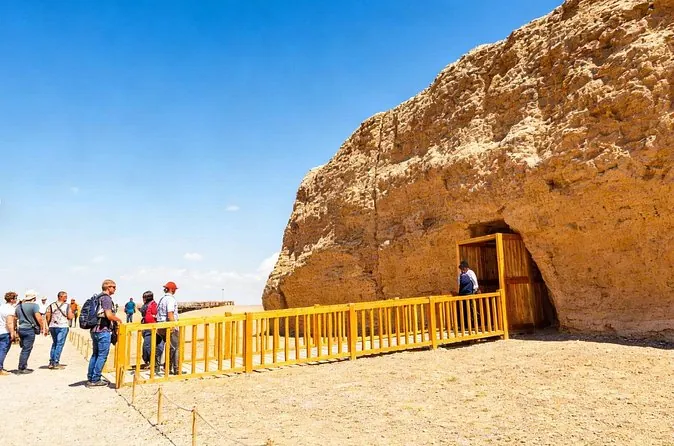
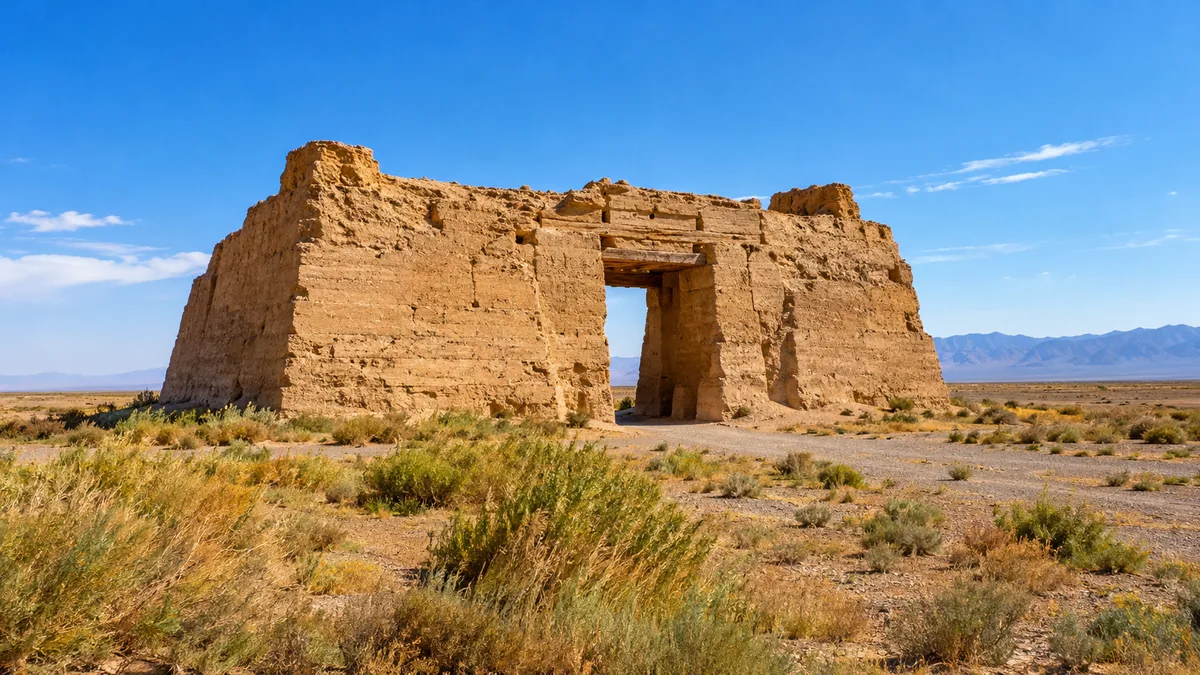
Northwest of town the oasis stops and the gravel desert begins. About 90 km out stands Yumen Pass, the Jade Gate, a square
fort of rammed earth that guarded the Han dynasty frontier, with ruins of the Han wall nearby built from layers of reeds and
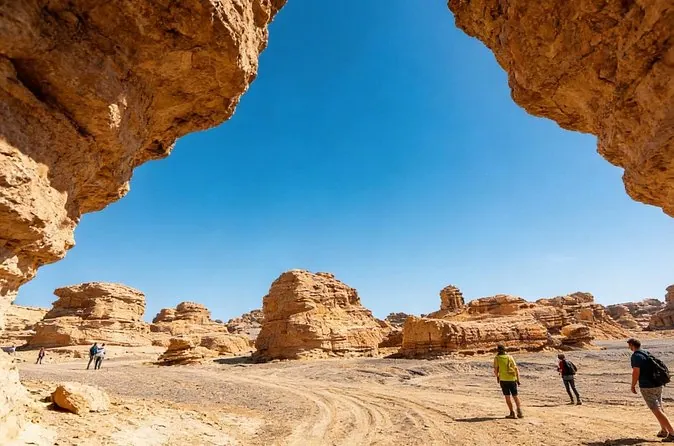
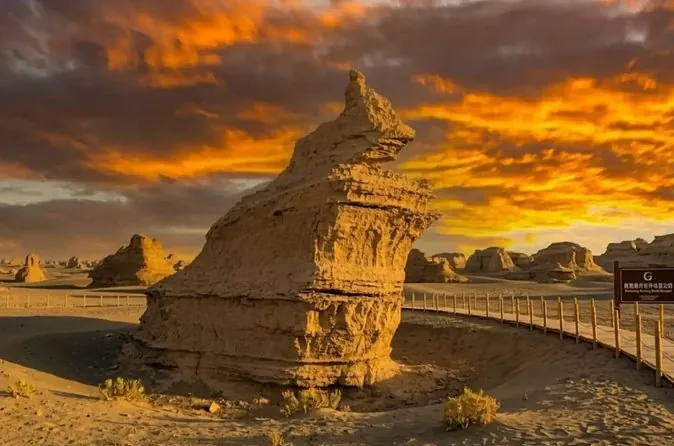
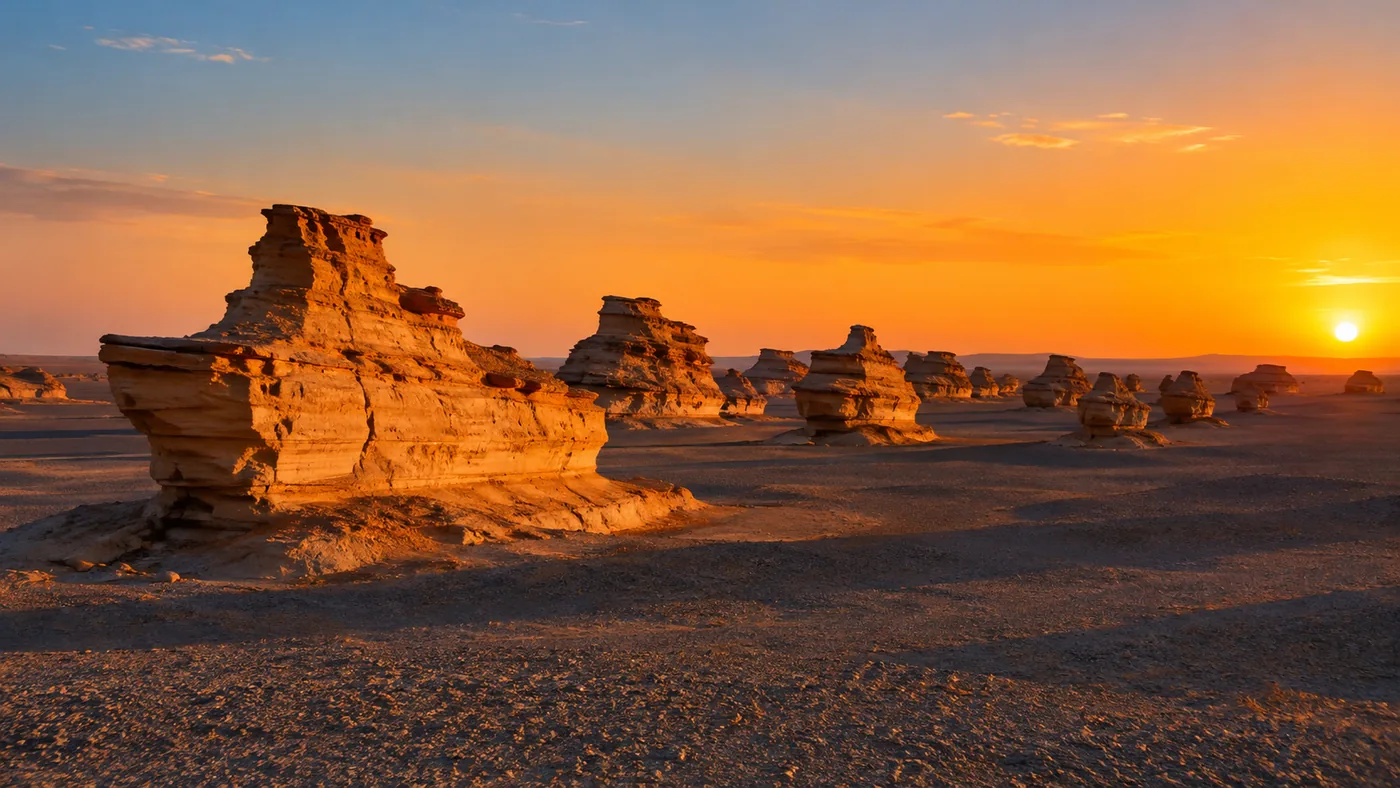
gravel. Further on is the Yadan geopark, where wind has carved clay ridges into shapes like a fleet of ships. It is a long,
hot day in a car, and worth it once.
Yumen Pass, the Jade Gate of the Han frontier, about 90 km from Dunhuang.
Timing it
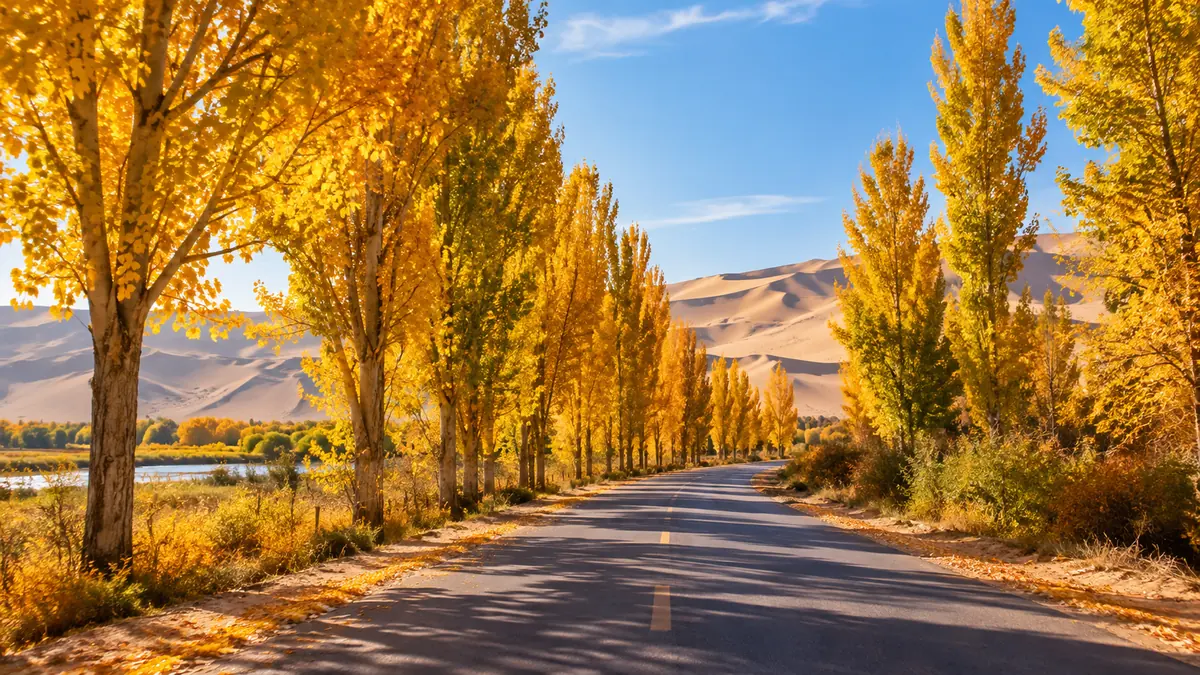
Spring and autumn are the sweet spot: May and June, then September and October with golden poplars in the oasis. Summer is
hot and crowded, and Golden Week in early October is the busiest of all. Winter is cold and quiet, and the only season when
a regular Mogao ticket shows you 10 caves for less money.
Camels waiting at the foot of Mingsha Shan before the evening ride.
Straight answers to what people ask most about Dunhuang tours.
How much does a Dunhuang tour cost?
Private day tours start at $94 per person for the cheapest option and largest group, and most all-inclusive days cost $100 to $280 per person. A Yadan jeep day is $399, a 3-day private tour $745. Prices drop as your group grows. The full breakdown is in the Mogao tickets guide.
Do I need a tour to visit the Mogao Caves?
No. You can book a real-name ticket yourself on the official site and go by taxi or bus to the Digital Exhibition Center. Inside the caves everyone is led by a site guide anyway. A tour adds the booking, the car and a private guide around the sites. See tour or on your own.
What is the difference between Mogao A and B tickets?
The A (regular) ticket costs CNY 238 from April to November and covers two films, the shuttle and 8 caves. The B "emergency" ticket costs CNY 100 for 4 caves and no films, and is released when A tickets sell out. In winter the regular ticket is CNY 140 for 10 caves.
How far ahead should I book Mogao tickets?
As early as you can for July, August, the May Day holiday and the first week of October, when both classes sell out. Reservations open on the official system and are checked against your passport, so a tour operator needs your passport details too.
Can I choose which caves I see at Mogao?
No. The Dunhuang Academy rotates the open caves for conservation, and your guide takes you to the ones open that day. Special caves cost CNY 150 to 200 each, on top of a regular ticket, with a small daily quota.
Can you take photos inside the Mogao Caves?
No. Photography and video are banned inside every cave. You can take pictures outside along the cliff and at the Digital Exhibition Center.
How many days do you need in Dunhuang?
Two full days cover the essentials: Mogao on one, the Mingsha dunes and Crescent Lake at sunset on the other. Add a third for the long Gobi day to Yumen Pass and Yadan. See how many days in Dunhuang.
How far are Yumen Pass and the Yadan geopark from Dunhuang?
Yumen Pass is about 90 km northwest and Yadan about 160 to 180 km, so the day is mostly driving. Inside both parks you ride the compulsory shuttle buses. Details in the Yumen Pass and Yadan guide.
Is the camel ride included at Mingsha Shan?
Usually not. The camel ride costs about CNY 100 per person at the dunes, and the park ticket is CNY 110 from April to October. Read the camel ride guide before you go.
When is the best time to visit Dunhuang?
May, June, September and October: warm days, cooler mornings and fewer crowds than July and August. Winter is cold and quiet, and Mogao is cheaper. More in the best time to visit.
Can I cancel a Dunhuang tour?
Every tour on this site cancels for a full refund up to 24 hours before, except the all-inclusive Mogao and singing dunes day, which is non-refundable. Check the policy on the listing before you pay.
Ready to book
Caves by morning, dunes by sunset.
Hotel pickup and a private guide on most tours, and free cancellation up to 24 hours before on all but one.

 Mogao only
★ 4.73 to 4 hoursFree cancellation